
The best way to Pay Employees in a Small Business
1/4/20263 min read
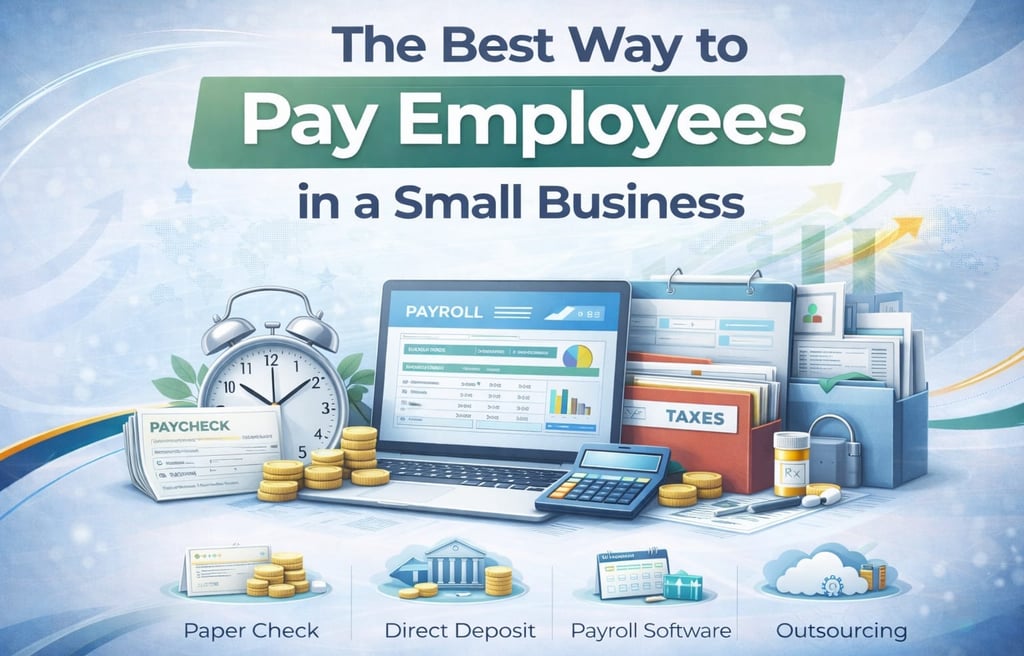

Paying employees correctly is one of the most important operational responsibilities in a small business. Payroll is not just about sending money on payday; it involves compliance with federal and state tax laws, accurate recordkeeping, proper worker classification, and consistent cash flow management.
Even small payroll mistakes can lead to employee dissatisfaction, financial penalties, or unwanted scrutiny from tax authorities. Because of this, payroll should be approached carefully and systematically rather than treated as a simple administrative task.
For most small businesses, the best way to handle payroll is to use an automated payroll service. Although it is technically possible to manage payroll manually, the time investment and risk of calculation errors often outweigh the cost savings.
Payroll software reduces human error, automates tax filings, ensures deadlines are met, and creates a clear paper trail. That combination of efficiency and compliance protection makes automation the most practical solution for growing businesses.
1. Choose a Payroll Method
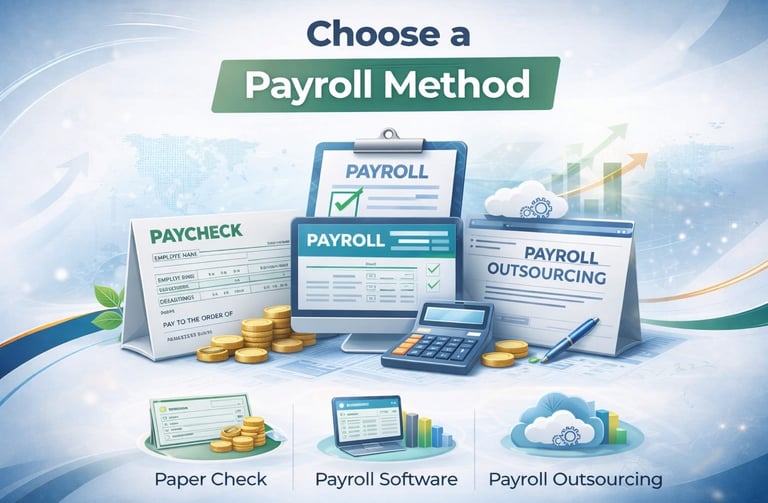
Before running payroll, you need to decide how it will be processed. Most small businesses fall into one of three common approaches, each with different cost structures and levels of involvement.
Full-Service Payroll Software (Recommended): Platforms like Gusto, QuickBooks Payroll, or OnPay automate tax filings, direct deposits, and year-end forms (W-2s/1099s). These are generally subscription-based and scale with your headcount.
Manual In-House Payroll: Using Excel or a calculator. This is "free" but extremely time-consuming and prone to human error regarding tax withholdings. One wrong formula can lead to significant penalties.
CPAs or Accountants: You hand over the hours, and they handle the rest. This is the most "hands-off" and compliant approach, but it is also the most expensive option, usually reserved for businesses with complex corporate structures.
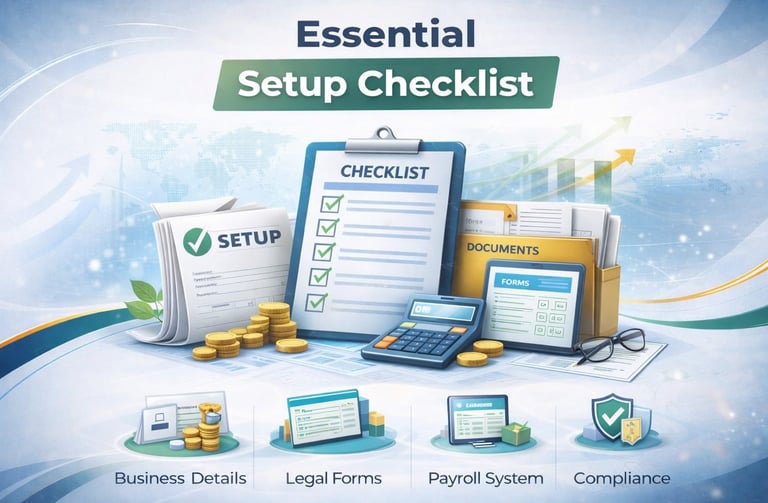
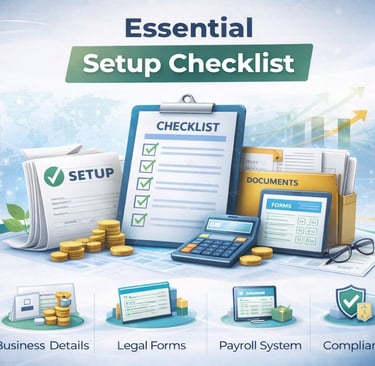
2. Essential Setup Checklist
EIN | An Employer Identification Number from the IRS; essentially a Social Security number for your business. Without it, you cannot legally run payroll.
Worker Classification | Determine if they are W-2 employees (you control when/how they work) or 1099 contractors (they are independent). Misclassification is a major red flag for the IRS.
State Registration | Register with your state’s labor department for unemployment insurance and income tax withholding.
I-9 & W-4 Forms | Every employee must complete these to verify eligibility to work and determine tax withholding allowances.
Workers' Comp | Most states require insurance to cover medical costs if an employee is injured on the job.
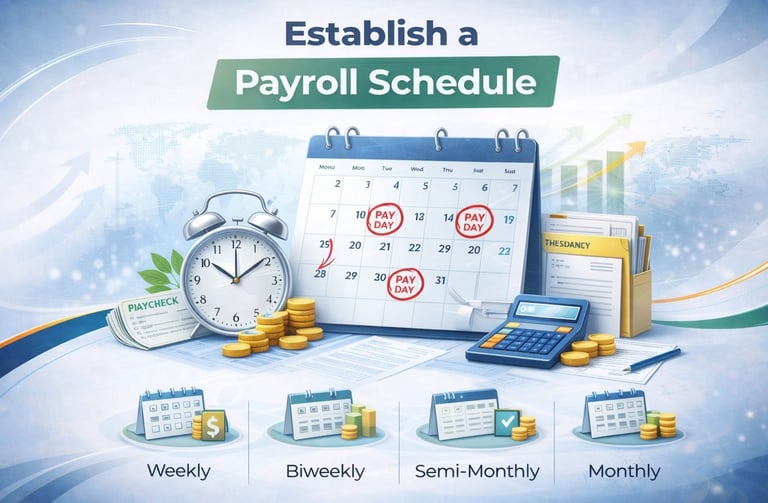
3. Establish a Payroll Schedule
Once your payroll system is set up, you need to determine how often employees will be paid. Consistency is key for employee morale and cash flow management. Choosing a frequency dictates your administrative rhythm:
Bi-weekly (Every 2 weeks): 26 pay periods a year. This is the most popular choice for employees as it provides a consistent payday (e.g., every other Friday). Many payroll systems are structured around this schedule, making it a practical default choice.
Semi-monthly (Twice a month): 24 pay periods (e.g., the 1st and 15th). This is easier for accounting and fixed salaries, but can be tricky for hourly employees if the period ends mid-week.
Weekly: 52 pay periods. Common in trades or high-turnover industries; however, it quadruples your administrative work compared to semi-monthly.
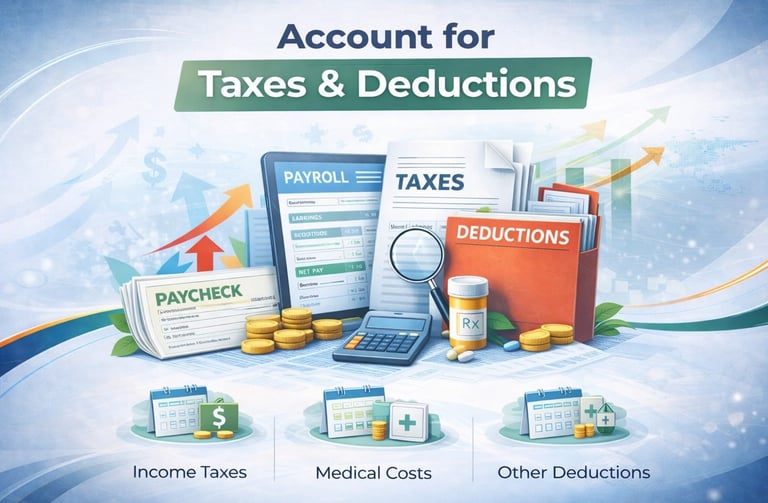
4. Account for Taxes and Deductions
When you pay an employee \$4,000 a month, it actually costs the business more, and the employee receives less. You must calculate and remit the following:
FICA Taxes: Social Security (6.2%) and Medicare (1.45%) withheld from the employee, which the employer must then match dollar-for-dollar.
FUTA/SUTA: Federal and State Unemployment taxes paid entirely by the employer.
Income Tax: Federal and (if applicable) state/local income taxes based on the employee’s W-4 selections.
Benefits: Voluntary deductions for health insurance premiums, 401(k) contributions, or HSAs.
Pro Tip: Set up a dedicated payroll bank account. Transfer the total "fully loaded" payroll cost (gross wages + employer-side taxes) into that account every period. This ensures you never accidentally spend the government's tax money on inventory or rent.
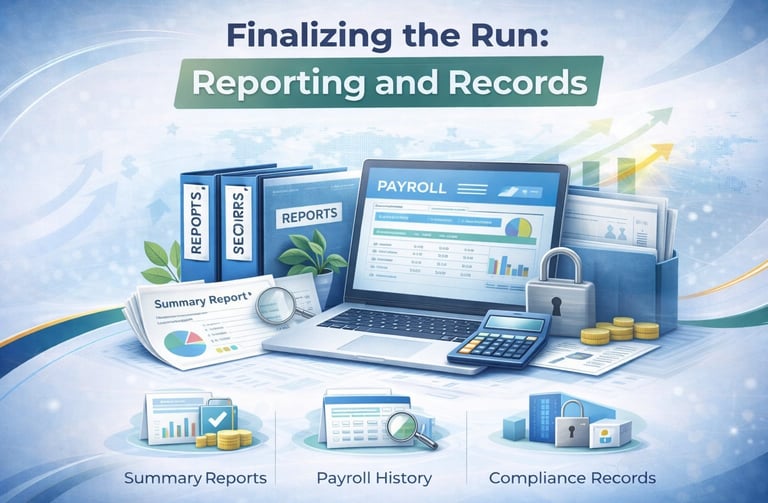
5. Finalizing the Run: Reporting and Records
The job isn't done once the direct deposit hits. Small businesses must maintain a paper trail to satisfy Department of Labor (DOL) requirements:
Quarterly Filings: File Form 941 to report income taxes, Social Security tax, and Medicare tax withheld from people's pay.
Annual Reporting: Issue W-2s to employees and 1099-NECs to contractors by January 31st of the following year.
Record Retention: Keep all payroll records—including time sheets, tax forms, and proof of payment—for at least 4 years.
Many small businesses encounter financial trouble not because they are unprofitable, but because they mismanage payroll tax cash flow.

Social Connection
© 2026. All rights reserved.